
Orthodontics
Crooked or misaligned teeth not only affect self-esteem, but also make oral hygiene more difficult, potentially leading to tooth decay, gum problems and pain in the jaw joint (TMJ).
Orthodontics is a branch of dentistry dedicated to the diagnosis, prevention and correction of the positioning of the teeth and jaws. The main aim of orthodontic treatment is to correct malocclusion (when the upper and lower teeth do not fit together properly). Crooked or misaligned teeth not only affect self-esteem but also make oral hygiene difficult, potentially leading to tooth decay, gum problems and pain in the jaw joint (TMJ).
Many people associate orthodontics solely with the use of braces, but this field goes far beyond that. Appropriate orthodontic treatment can help prevent problems such as tooth wear, temporomandibular joint (TMJ) pain, difficulties with chewing, breathing problems and even speech impediments.
Orthodontics is used to correct problems related to:
- Crooked or misaligned teeth
- Gaps between the teeth
- Crossbite
- Open bite
- Deep bite
- Crowded teeth
- Midline deviations
- Jaw development problems
In addition to the aesthetic benefits, orthodontic treatment significantly improves oral hygiene. Straight teeth are easier to clean, reducing the risk of tooth decay, gingivitis and periodontal disease.
Conventional Fixed Braces (Metal)
This is the best-known and most traditional type. It uses metal brackets bonded to the teeth and elastic bands (the famous ‘rubber bands’) to move the teeth.
Advantages: It is highly effective for complex cases and is usually the most economical option.
Invisible Aligners (Angel, Spark, Invisalign and other brands)
This is the major trend in orthodontics. It consists of a series of transparent, removable plastic aligners, custom-made using a 3D digital scan of the patient’s mouth.
Advantages: They are virtually invisible, can be removed for eating and make brushing your teeth much easier. Initial comfort is superior to that of braces.
It is normal to experience some discomfort in the first few days after the aligners are fitted or after adjustments.
However, the discomfort is usually mild and temporary.
Clear aligners tend to be more comfortable than traditional fixed braces.
The duration depends on several factors:
- The complexity of the case
- The type of appliance used
- The patient’s age
- Cooperation with treatment
- Frequency of appointments
On average, orthodontic treatment can last between 12 and 36 months.
Simple cases can be resolved more quickly, whilst more complex situations may take longer.
Good oral care during orthodontic treatment is essential to ensure good results.
It is important to brush your teeth after every meal and floss daily.
Thorough oral hygiene
Proper oral hygiene helps to prevent:
- Tooth decay
- Gum inflammation
- Bad breath
- Stains on the teeth
Diet during orthodontic treatment
Some foods can damage braces.
Avoid:
- Hard sweets
- Chewing gum
- Very hard nuts
- Popcorn
- Ice
- Caramels
Opt for:
- Soft foods
- Chopped fruit
- Cooked vegetables
- Balanced meals
Correct use of clear aligners
Wear them for 20 to 22 hours a day
Remove them only to eat
Wash the aligners regularly
Dry them and store them in the appropriate case
Many adults put off their dream of having a perfect smile because they believe that braces are “just for teenagers”.
The truth is that there is no age limit for undergoing orthodontic treatment.
Nowadays, the only requirement for straightening your teeth is to have healthy bone structure and gums.
In fact, demand for orthodontics among adults has skyrocketed in Portugal in recent years for three main reasons:
Total discretion: With the advent of invisible aligners (such as Angel, Spark or Invisalign), you can straighten your smile without anyone noticing you’re undergoing treatment. Perfect for both professional and social settings!
Health and quality of life: Many adults complain of headaches, tooth wear or difficulty chewing. Straightening your teeth can be part of the treatment for these health issues, which tend to worsen with age.
Self-esteem: It’s never too late to invest in yourself. Having the freedom to smile for a photo or at a work meeting without feeling self-conscious is priceless.
So, if you think “it’s too late for me”, get that idea out of your head. The best time to look after your smile is now.
Learn more about our dentists
Learn more about our healthcare professionals. Rizo & Mendonça is formed by a medical team with extensive clinical preparation and experience that will provide professional and personalized care. Your health is the most important thing.
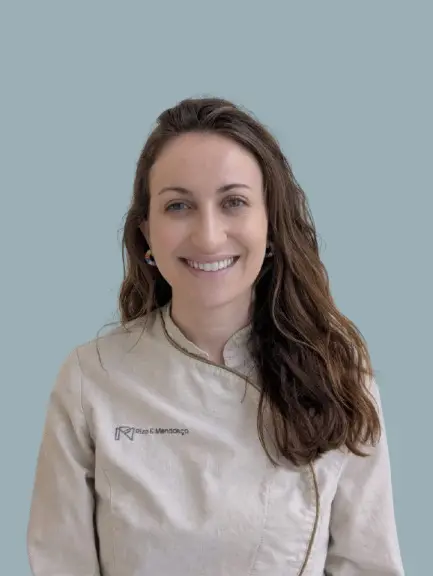
DRA. Carla Guerreiro
Dentist - Orthodontics | OMD 11571
DRA. Carla Guerreiro
Dentist - Orthodontics | OMD 11571
IIntegrated Master’s Degree in Dentistry | Fernando Pessoa University – Porto, Portugal
ORTHODONTICS AND FACIAL ORTHOPAEDICS - Eduardo Prado Institute | Lisbon, Portugal
SPARK, ANGEL and INVISALIGN Certifications
Orthodontic Excellence with the ORMCO Damon Ultima System | Lisbon, Portugal
ORTHODONTICS AND FACIAL ORTHOPAEDICS - Eduardo Prado Institute | Lisbon, Portugal
SPARK, ANGEL and INVISALIGN Certifications
Orthodontic Excellence with the ORMCO Damon Ultima System | Lisbon, Portugal
-
Dra. Carla Guerreiro
-
Dentist - Orthodontics | OMD 11571
-
Dra. Carla Guerreiro
-
Dentist - Orthodontics | OMD 11571
